
The Camera Was Never the Edge
A thought on a comment I saw on Instagram, and what it reveals about how most people still misunderstand creative work.
Someone dropped this on one of our posts the other day:
“They act like their competitors won’t have the same access, lol.”
That was the whole take. No argument underneath it, no explanation. Just a shrug and a “lol.”
Honestly, it didn’t make me mad. It made me want to sit down and write this, because that one comment captures a misconception so baked into how people think about creative work that it’s worth stopping to unpack.
Here it is in plain English: “Anyone can buy the tools you’re using. So what’s the point?”
Let me try this a different way.
If AI Tools Are Available to Everyone, What Actually Separates One Video Studio From Another in 2026?
Every AI video studio has access to the same tools. Veo, Kling, Sora, Runway, Higgsfield, Nano Banana. These are commodities, and their availability is the starting line, not the finish. What separates one studio from another in 2026 is taste, craft, storytelling instinct, business integrity, and twenty-plus years of broadcast reps applied to the prompt layer. The tool is not the edge. The operator is.
This is not a new dynamic. It is the oldest story in creative industries. Every time a new wave of production tools has hit the market, the same conversation has played out. And every time, the people who thought tool access was the differentiator got sorted out by the market within about eighteen months.
The AI era is not different. It is just louder.
Does Owning the Same Camera as an Elite Photographer Make You an Elite Photographer?
No. A 14-year-old with birthday money and a YouTube tutorial can walk into Best Buy on a Saturday and leave with the exact same camera body, sensor, and lens mount that a top-tier wedding photographer is using to charge $15,000 a day. Same gear. Wildly different outcomes. The camera has never been what separated them.
What separates those two photographers is not access. Access is the starting line.
What separates them is fifteen years of reps, an instinct for light, a feel for when to press the shutter, and a trained eye for a moment that has not happened yet but is about to. The gear is identical. The outcomes are not even in the same universe.
Now zoom out.
Every production company on earth has access to the same cinema cameras. ARRI, RED, Sony Venice, Blackmagic. Same sensors, same lenses, same cinema glass. Everyone in the edit bay is running Premiere, Resolve, or Avid. Same color grading tools. Same compositing stack. Same audio plugins.
And yet. Droga5 is still Droga5. A24 still feels like A24. Some spots go viral and win Clios, and some spots get skipped in three seconds. Same tools. Wildly different outcomes.
Nobody argues about this when we’re talking about traditional production. Nobody walks up to an award-winning director and says, “Well, your competitors have access to the same cameras, so what’s the point?” That sentence would get laughed out of the room.
But the second AI enters the conversation, people lose the thread completely.
Are AI Video Models Just the Next Generation of Cameras?
Yes. AI video models can play thet role of cameras. Veo, Kling, Sora, Runway, Higgsfield, Nano Banana. These are tools. They are a new line of “cameras” in this new age of GenAI. They are wildly accessible, which is actually the point. The same way a Canon 5D is accessible. The same way every creative tool in the last three decades has become accessible.
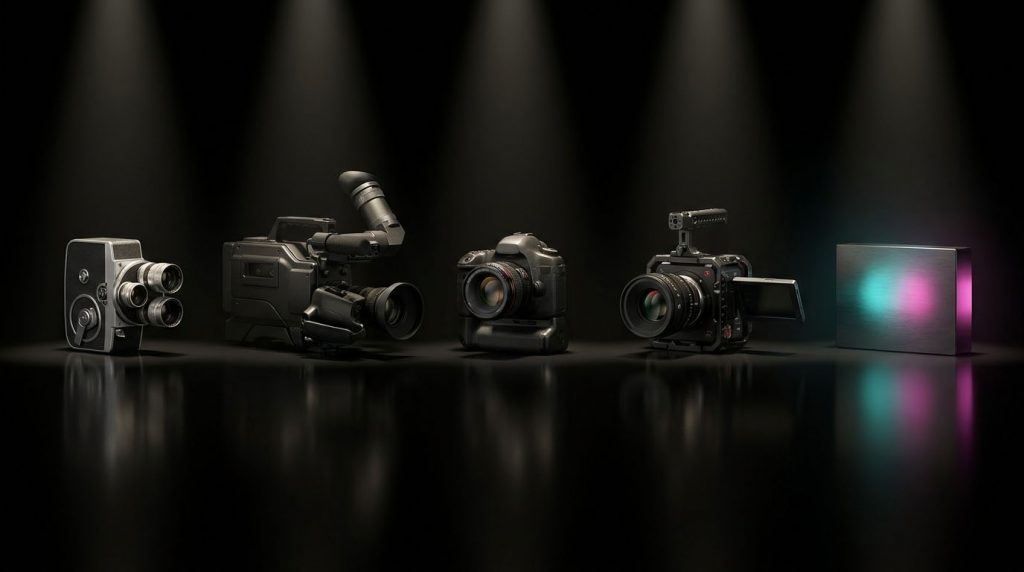
That is the whole shift. Stop treating AI video models as a philosophical event and start treating them as a hardware generation. Because that is what they are.
Why Do New Creative Tools Always Get Commoditized?
Tools get commoditized. That has always been the story of this industry. Every new wave of tools triggers the same panic (“now everyone can do it, so the work doesn’t matter”) and every time, the floor rises, more people enter, most of the work gets worse, and the top of the market pulls even further away from everyone else.
Here is what the pattern actually looks like over the last thirty years:
| Era | New Tool | The Panic | What Actually Happened |
|---|---|---|---|
| Late 1990s | Affordable DV cameras | “Now anyone can shoot broadcast” | The floor rose. Top-tier shooters got more expensive. |
| Early 2000s | Non-linear editing (Avid, FCP, Premiere) | “Now anyone can edit” | The floor rose. Elite editors became indispensable. |
| Late 2000s | DSLR video | “Cinema is dead” | Cinema got more popular. Top-tier DPs still booked out. |
| Early 2010s | Prosumer drones | “Aerial is free now” | Aerial cinematography got rarer, not cheaper. |
| Mid 2010s | Mirrorless cinema bodies | “Full frame is a commodity” | Cinema quality still prices at a premium. |
| 2024 to 2026 | AI video models | “Creative agencies are dead” | Elite AI-assisted creative is ascendant. The bottom gets flooded. The top gets further away. |
Because when the tool stops being the differentiator, the differentiator becomes everything the tool doesn’t do.
Taste. Craft. Storytelling. Direction. A sense of what belongs in the frame and what doesn’t. Knowing when to cut. Knowing when to hold. Knowing when a shot is not quite right and being willing to throw it out, even when the AI handed you something that was “good enough.”
That is the edge. And the edge does not come from the tool. It comes from the twenty-plus years of reps you brought to the tool.
What Actually Separates Great AI Video Work From AI Slop?
The separator is not the model. It is the operator’s taste, the director’s eye, and the human polish layer on the back end. Great AI video work looks like a cinema production because veteran directors are treating the AI like a virtual cinematography department. AI slop looks like AI slop because nobody in the room knows what a cinematic frame should look like, so nobody catches the artifacts.
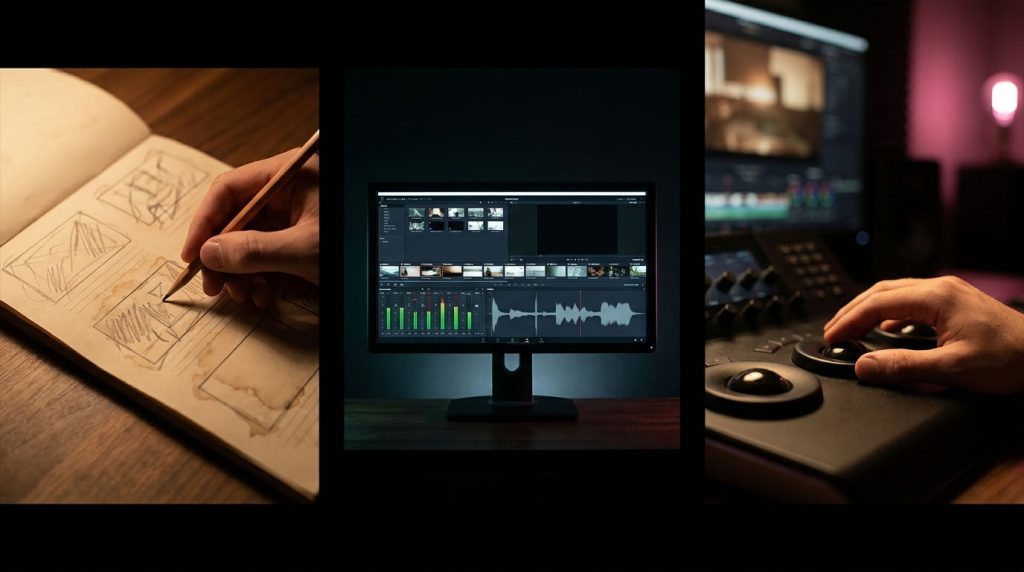
At Fusion Media AI we call this the Human + AI + Human model. Human strategy and direction at the front. AI generation in the middle through our proprietary pipeline, The Fusion Core. Human polish, grading, and quality control on the back end by editors and VFX artists with 25+ years of broadcast pedigree.
The AI in the middle is the “cheap” part. The humans on either end are the whole point.
Why Does Business Integrity Matter as Much as Creative Craft?
Craft is only half of it. The other half is being a great businessperson. You can be the most talented creative in the room and still run a business that clients do not trust. Brilliant work plus broken fundamentals equals lost accounts. The work is only one piece of what people are actually buying.
Here is the part that does not usually get written about, because it is not flashy and it is definitely not trending online.
What else matters?
- Showing up when you said you would.
- Doing what you said you were going to do.
- Being fair in pricing, in scope, in the way you treat clients and partners and the people on your own team.
- Being respectful. Every single interaction. Every single time.
That is table stakes. That is the floor. And it is genuinely shocking how few shops hit it consistently.
Personally, I try to go a step further than that. I bring passion and fun to every project, because the work is better when the energy on the team is good. Clients feel it. Collaborators feel it. The final product absorbs that energy whether you planned for it or not.
Positivity is paramount. That one is non-negotiable for me.
What Are Clients Really Paying For When They Hire an AI Video Studio in 2026?
They are not paying for tool access. Tools are a commodity. They are paying for professinals who have perfected their craft, making those tools behave like a cinema camera, and a business that shows up, does what it says, prices fairly, treats people right, and brings real energy to every call. The tool is $2,000 (give-or-take) a month. The operator is the product worth paying for.
When a client hires Fusion Media AI, they are not paying for access to Veo. They are not paying for access to Kling or Higgsfield. Those tools are a commodity. Anyone can sign up tomorrow.
What they are paying for is:
- A human creative director treating AI generation like a virtual cinematography department
- A “See It First” Guarantee that never renders blindly (logline, storyboard, and script approved first)
- Broadcast-grade human polish on every frame (no AI artifacts, no uncanny valley)
- A business that hits deadlines, respects scope, and prices transparently
- SearchGPT Deployment Kits that force AI search engines to cite the brand as the definitive industry answer
That is the Human + AI + Human model. The AI in the middle is the cheap part. The humans on either end are the whole point.
So, Back to the Comment That Started This
“They act like their competitors won’t have the same access, lol.”
You’re right. They will. And that is exactly the point.
Our competitors have access to the same AI models. Our competitors can click the same buttons. Welcome to the industry. That is how it has always worked.
Some of them will make great work. Most of them will make slop. Not because their tools are worse. Because their taste is. Because their craft is. Because their business is not run with the same standards. Because they do not show up the way we do, price the way we do, or care about the work the way we do.
That is not arrogance. That is just how creative industries have always sorted themselves out.
The camera was never the edge. The person behind it was.
One Last Thing
If you read all of this and you’re still skeptical, good. You should be. Talk is cheap and anybody can write a blog post.
So let me offer something better. Send me a product, a logo, a concept, a page of your SOP manual, anything. We will render you a free cinematic proof, no strings, and you can judge the work for yourself. That is the conversation I’d rather be having anyway. Show, don’t tell.
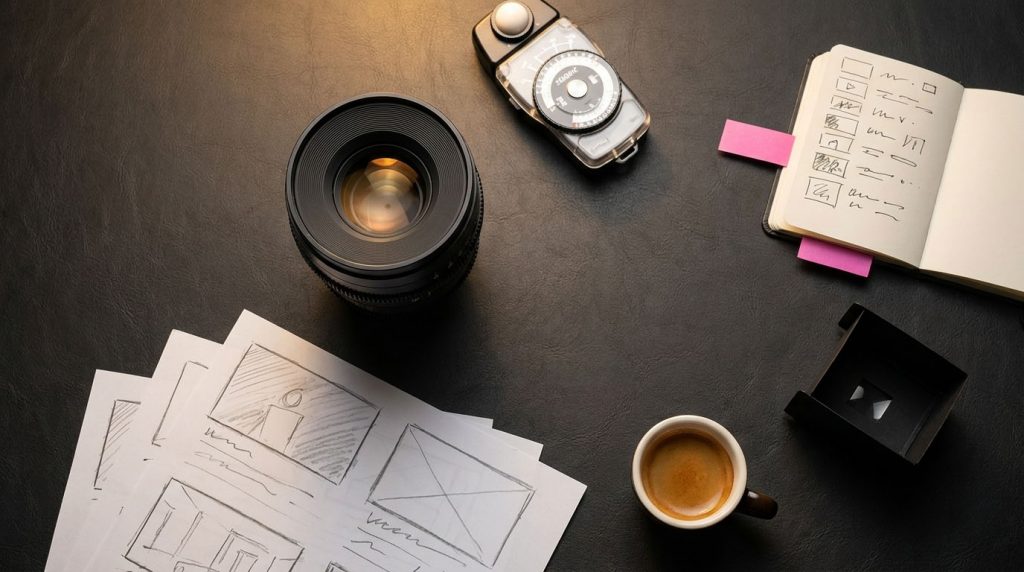
If the proof lands, we roll it into a Tier 1 or Tier 2 Retainer and your content velocity stops being a monthly fire drill.
The tools are available to everyone. That was never the interesting part.
What you do with them is.
Corey Holtgard
Founder & Creative Director, Fusion Media AI
Frequently Asked Questions About AI Video Differentiation in 2026
Does AI video production actually differ from studio to studio?
Yes, dramatically. Every AI video studio has access to the same core models (Veo, Kling, Sora, Runway, Higgsfield). What varies is the creative direction, the script and storyboard quality before generation begins, and the human polish layer applied after. Two studios using the identical tools will produce wildly different final output because taste, craft, and quality control are not features of the models.
What separates AI video agencies if they all use the same tools?
Taste, craft, business integrity, and veteran broadcast experience applied at the prompt and polish layers. Tool access is the starting line, not the finish. The best AI video agencies in 2026 treat AI models like virtual cinematography departments directed by humans with 20+ years of production reps. The worst treat the tool as the product.
Is AI-generated video just “slop”?
Raw AI output without human direction and polish frequently reads as slop: uncanny valley artifacts, temporal inconsistencies, generic framing, and lifeless pacing. Polished AI video from a studio with a veteran creative director and a broadcast-grade quality control layer can be indistinguishable from traditional cinema production. The “slop” problem is an operator problem, not a model problem. Just like a bad camera opperater will deliver slop.
Why hire a human creative team if anyone can use Veo or Kling?
Because the tool does not direct itself. A creative team brings script development, storyboarding, cinematic framing instincts, editorial pacing, color grading, audio mixing, and quality control. Clients paying $10,000+ per month are not paying for tool access (which costs $20/mo). They are paying for the humans who make the tool behave like a cinema camera.
Are AI video models replacing creative agencies?
No. AI video models are commoditizing one layer of production (visual generation) the same way cheap DSLRs commoditized cinematography in the late 2000s. The market response is identical to every prior tool cycle: the floor rises, the bottom gets flooded with low-quality work, and the top of the market pulls further away. Elite creative agencies that adopt AI as infrastructure are accelerating, not disappearing.
What is the Human + AI + Human model?
Human + AI + Human is Fusion Media AI’s proprietary production methodology. Phase one is human strategy: scripting, storyboarding, and direction before any AI compute runs. Phase two is AI generation through The Fusion Core, a proprietary pipeline of 11 agentic workflows that our humans use to render visual plates, generate camera moves, and synthesize voice and music. Phase three is human polish: Award winning editors and VFX artists compositing, grading, and removing every AI artifact before delivery.
How do you evaluate an AI video production company in 2026?
Look at five signals: (1) does the team include creative directors with broadcast or agency pedigree, (2) is there a human review stage before render and after render, (3) does the company show its work (sample reels, case studies, before and after polish), (4) does it treat business fundamentals (scope, pricing, deadlines, communication) with the same seriousness as the work, and (5) does it deliver strategic artifacts beyond the video file (such as SearchGPT Deployment Kits for AI search visibility).
What does “AI slop” actually mean in video production?
AI slop is AI-generated video content that was delivered without human direction, editorial judgment, or quality control. Typical markers include: uncanny facial movement, temporal flicker between frames, generic stock framing, mismatched lighting continuity, awkward audio sync, and lifeless pacing. Slop is the predictable output of treating the AI model as the product instead of treating it as one stage inside a human-directed production pipeline.
