Strategy · Product program
The Camera Was Never the Edge: AI Video in 2026
Every AI video studio uses the same tools. A founder's note on why taste, craft, and business integrity are the only real differentiators in 2026.
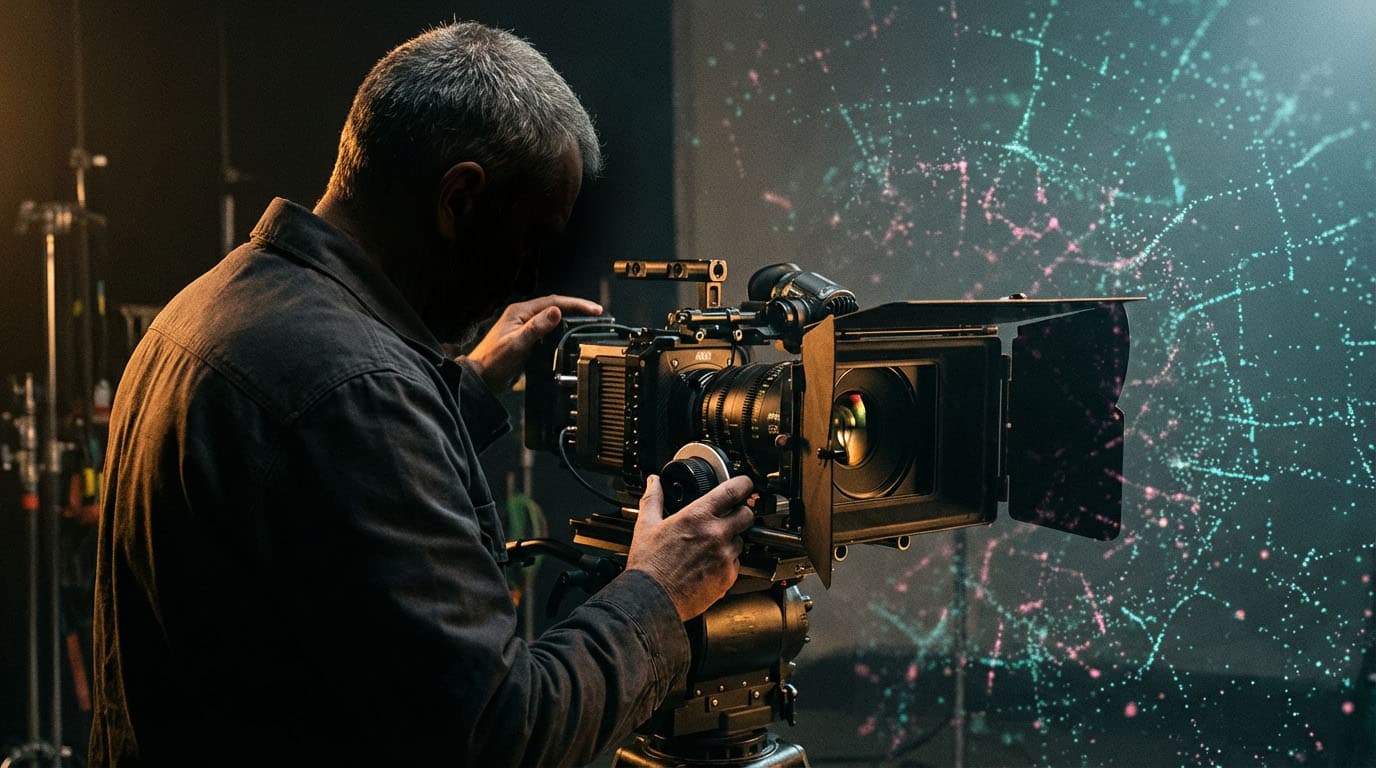
A thought on a comment I saw on Instagram, and what it reveals about how most people still misunderstand creative work.
Someone dropped this on one of our posts the other day:
“They act like their competitors won't have the same access, lol.”
That was the whole take. No argument underneath it, no explanation. Just a shrug and a "lol."
Honestly, it didn't make me mad. It made me want to sit down and write this, because that one comment captures a misconception so baked into how people think about creative work that it's worth stopping to unpack.
Here it is in plain English: "Anyone can buy the tools you're using. So what's the point?"
If AI Tools Are Available to Everyone, What Actually Separates One Video Studio From Another in 2026?
Every AI video studio has access to the same tools. Veo, Kling, Sora, Runway, Higgsfield, Nano Banana. These are commodities, and their availability is the starting line, not the finish. What separates one studio from another in 2026 is taste, craft, storytelling instinct, business integrity, and twenty-plus years of broadcast reps applied to the prompt layer. The tool is not the edge. The operator is.
This is not a new dynamic. It is the oldest story in creative industries. Every time a new wave of production tools has hit the market, the same conversation has played out. And every time, the people who thought tool access was the differentiator got sorted out by the market within about eighteen months.
The AI era is not different. It is just louder. For buyers comparing this against actual service delivery, the Tampa AI video production guide explains how the same principle shows up in studio evaluation, pricing, and quality control.
Does Owning the Same Camera as an Elite Photographer Make You an Elite Photographer?
No. A 14-year-old with birthday money and a YouTube tutorial can walk into Best Buy on a Saturday and leave with the exact same camera body, sensor, and lens mount that a top-tier wedding photographer is using to charge $15,000 a day. Same gear. Wildly different outcomes. The camera has never been what separated them.
What separates those two photographers is not access. Access is the starting line. What separates them is fifteen years of reps, an instinct for light, a feel for when to press the shutter, and a trained eye for a moment that has not happened yet but is about to.
Every production company on earth has access to the same cinema cameras. ARRI, RED, Sony Venice, Blackmagic. Same sensors, same lenses, same cinema glass. And yet, Droga5 is still Droga5. A24 still feels like A24. Same tools. Wildly different outcomes.
Nobody argues about this when we're talking about traditional production. But the second AI enters the conversation, people lose the thread completely.
Why Do New Creative Tools Always Get Commoditized?
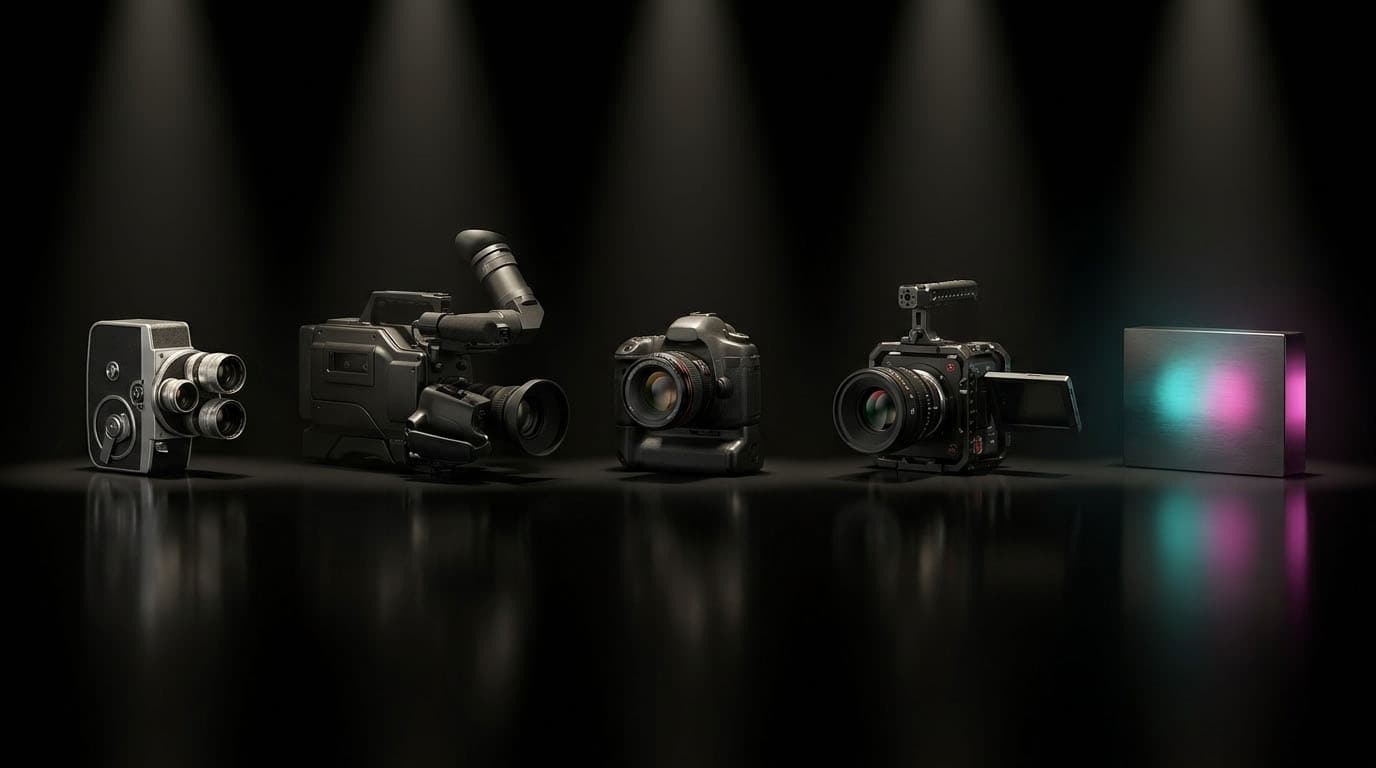
Tools get commoditized. That has always been the story of this industry. Every new wave of tools triggers the same panic ("now everyone can do it, so the work doesn't matter") and every time, the floor rises, more people enter, most of the work gets worse, and the top of the market pulls even further away from everyone else.
| Era | New Tool | The Panic | What Actually Happened |
|---|---|---|---|
| Late 1990s | Affordable DV cameras | "Now anyone can shoot broadcast" | The floor rose. Top-tier shooters got more expensive. |
| Early 2000s | Non-linear editing | "Now anyone can edit" | The floor rose. Elite editors became indispensable. |
| Late 2000s | DSLR video | "Cinema is dead" | Cinema got more popular. Top-tier DPs still booked out. |
| Early 2010s | Prosumer drones | "Aerial is free now" | Aerial cinematography got rarer, not cheaper. |
| Mid 2010s | Mirrorless cinema bodies | "Full frame is a commodity" | Cinema quality still prices at a premium. |
| 2024-2026 | AI video models | "Creative agencies are dead" | Elite AI-assisted creative is ascendant. The bottom gets flooded. The top gets further away. |
When the tool stops being the differentiator, the differentiator becomes everything the tool doesn't do. Taste. Craft. Storytelling. Direction. A sense of what belongs in the frame and what doesn't. Knowing when to cut. Knowing when to hold.

What Actually Separates Great AI Video Work From AI Slop?
The separator is not the model. It is the operator's taste, the director's eye, and the human polish layer on the back end. Great AI video work looks like a cinema production because veteran directors are treating the AI like a virtual cinematography department. AI slop looks like AI slop because nobody in the room knows what a cinematic frame should look like.
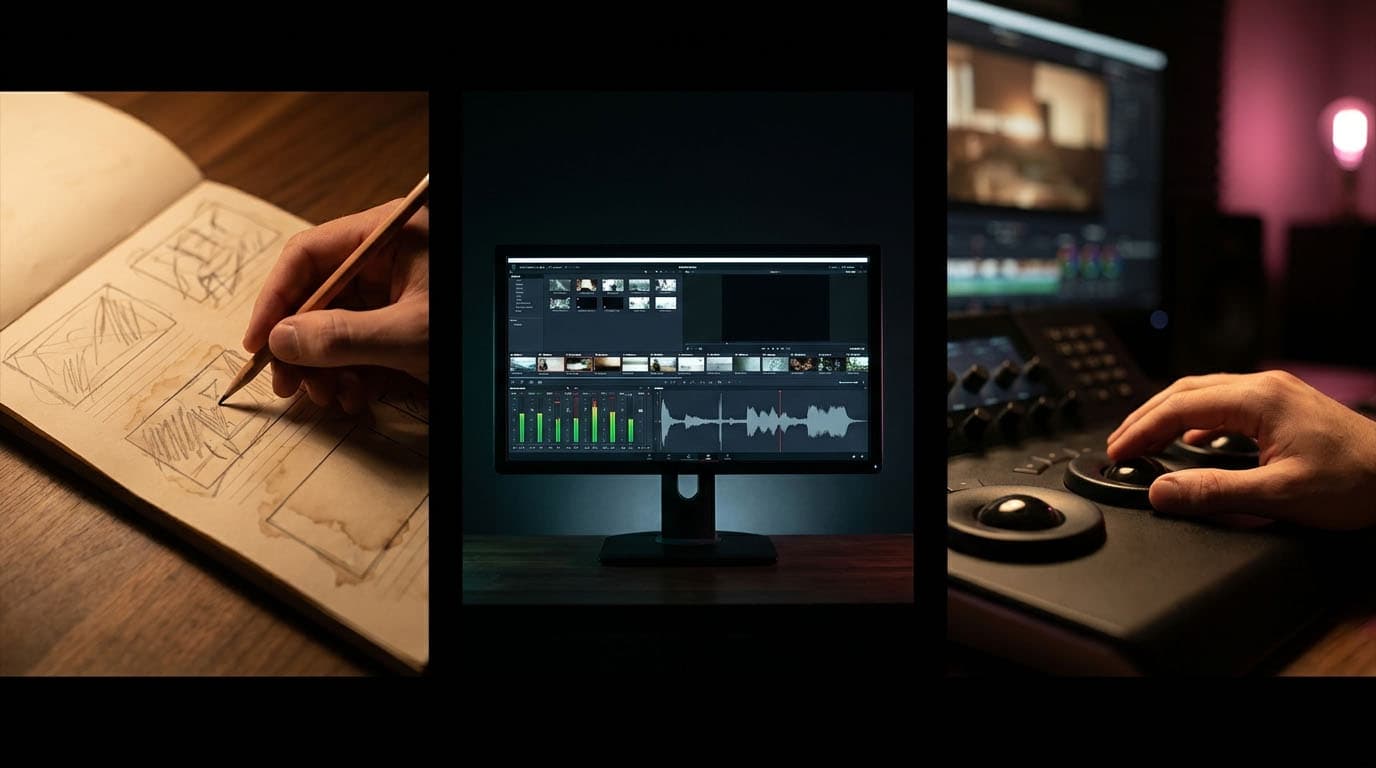
At Fusion Media AI we call this the Human + AI + Human model. Human strategy and direction at the front. AI generation in the middle through our proprietary pipeline, The Fusion Core. Human polish, grading, and quality control on the back end by editors and VFX artists with 25+ years of broadcast pedigree. The companion service overview breaks down what that workflow ships across founders, enterprise, agency, and franchise engagements.
The AI in the middle is the "cheap" part. The humans on either end are the whole point.
Why Does Business Integrity Matter as Much as Creative Craft?
Craft is only half of it. The other half is being a great businessperson. You can be the most talented creative in the room and still run a business that clients do not trust. Brilliant work plus broken fundamentals equals lost accounts.
- Showing up when you said you would.
- Doing what you said you were going to do.
- Being fair in pricing, in scope, in the way you treat clients and partners.
- Being respectful. Every single interaction. Every single time.
That is table stakes. That is the floor. And it is genuinely shocking how few shops hit it consistently. Personally, I try to go a step further. I bring passion and fun to every project, because the work is better when the energy on the team is good. Positivity is paramount. That one is non-negotiable for me.
So, Back to the Comment That Started This
"They act like their competitors won't have the same access, lol."
You're right. They will. And that is exactly the point. Our competitors have access to the same AI models. Welcome to the industry. That is how it has always worked.
Some of them will make great work. Most of them will make slop. Not because their tools are worse. Because their taste is. Because their craft is. Because their business is not run with the same standards.
The camera was never the edge. The person behind it was.

Corey HoltgardFounder & Creative Director, Fusion Media AI